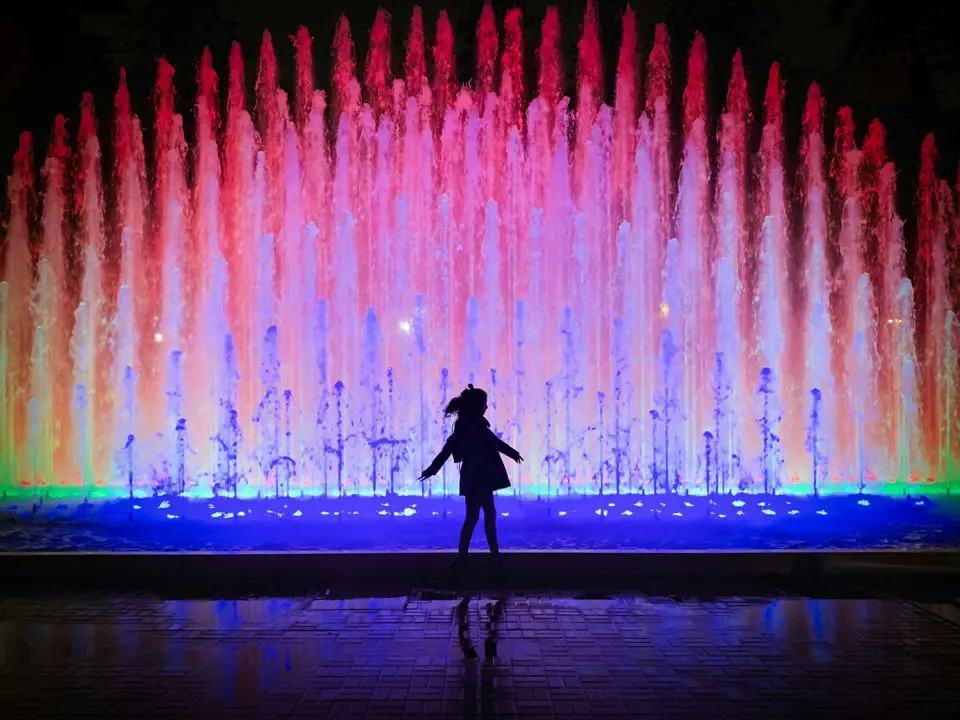
If you are going to visit the beautiful and bohemian neighborhood of Miraflores, rearrange your schedule a bit and save a few hours (or even a night) for Barranco. It is one of the most picturesque and interesting neighborhoods in Lima, ideal for strolling, eating well, having a drink, and letting yourself go...
To get your bearings, Barranco is one of the 43 districts that make up the Peruvian capital. It borders Miraflores to the north, Santiago de Surco to the east, Chorrillos to the south, and the Pacific Ocean to the west. It is a coastal neighborhood, with a sea breeze, open views, and a much milder climate in summer.
Getting there from Miraflores is easy: taxi, public transport, or even by bike if you like to move actively.
If you are wondering what is so special about Barranco, let's start with the obvious: it is one of the most beautiful neighborhoods in Lima to walk aimlessly. Colorful houses, quiet streets, old balconies, murals everywhere, and an artistic vibe that you feel as soon as you set foot in the neighborhood.
Barranco was founded in 1874 and during the late 19th century, it functioned as a summer resort for the Lima aristocracy. Many of those European-style mansions are still standing, coexisting today with modern bars, art galleries, and trend-setting restaurants.
What to see in Barranco, Lima
The classic route starts with the famous “Bajada de los Baños”. It is a very beautiful path, surrounded by old mansions, gardens, and a beautiful grove, which descends from the heart of Barranco to the beach. In the past, it was the path used by wealthy families to reach the spas on hot days, and today it is one of the most beautiful walks in the district.
If you like to explore like this, with a little more historical and cultural context, a good alternative is to join the walking tour of Barranco, which includes key stops such as the Bridge of Sighs (Puente de los Suspiros), the Water Circuit, squares, murals, and emblematic streets, accompanied by a guide who tells anecdotes and facts that only locals know.
At the end of the path, you reach the Malecón de Barranco, one of the highlights of the district, with panoramic views and a lot of tourist movement. Cyclists, runners, and boys and girls rollerblading or skateboarding cross paths constantly at this point during the weekends. If you want to escape that hustle, there are several parks around with quiet environments, ideal to stop and rest and look at the sea.
Very close to this point you will find the famous Ermita de Barranco, a church that was built in the mid-18th century. Here, according to the locals, humble fishermen and travelers came in search of tranquility. However, after the brutal 8-degree earthquake on the Richter scale that occurred in 1940, a large part of the city, including that building, was severely damaged.
Since then, different municipal governments ordered various reconstruction works on its infrastructure, and although the collateral effects of the earthquake can still be seen, La Ermita remains a reference point for the locals and a symbol of Barranco identity.
A day in Barranco, Lima: how to get there from Miraflores
The distance from Miraflores to Barranco is about 3.5 kilometers and the best way is the axis of the malecones, a route that connects both districts along the edge of the Costa Verde cliff. Starting from Kennedy Park, the commercial core of Miraflores, the most efficient route is through the use of bike paths or walking. This allows you to avoid the dense vehicular traffic of arteries such as Avenida Larco or Avenida 28 de Julio, which usually present congestion during peak hours.
A recommended option is our bike tour from Miraflores to Barranco. The route crosses the coastal landscape with panoramic views of the Pacific Ocean, passing through landmarks such as the Parque del Amor before entering the bohemian streets of Barranco. The plan is completed with the ascent to the Morro Solar, from where some of the best panoramic views of Lima are obtained. It is a different way of understanding the geography of the city and connecting several neighborhoods in a single outing.
If motorized transport is chosen, the travel time varies between 10 and 25 minutes depending on the flow on Avenida Almirante Miguel Grau, the main urban integration route that links the residential modernity of Miraflores with the historical and artistic sector where the Bridge of Sighs is located.
Where to eat in Barranco, Lima
Barranco is also synonymous with eating well. Between walks and hikes, you have to stop to enjoy a quiet moment and try all kinds of typical dishes from Lima or Peruvian cocktails.
We recommend visiting the places located on Grau, San Martín, and Pedro de Osma avenues, among which Juanito, Ayahuasca, and Victoria Bar stand out. Otherwise, one of the obligatory stops is Colonia & Co, which offers Peruvian coffee, brunch, and healthy dishes.
On the other hand, if you want to connect with more of the nightlife, with good music and craft beer, the best option is the bars Garrison, Piselli, and La Noche. The latter also offers live concerts as part of its appeal.
For those who want to try several flavors in a short time, there is a walking gastronomic tour in Barranco, ideal for discovering classics of Peruvian cuisine such as ceviche, causa limeña or lomo saltado, as well as typical drinks such as chicha morada or the inevitable pisco sour. The tour combines walking, neighborhood history, and several stops to eat, including a sweet finish in an artisanal ice cream parlor. It is a great option if you have little time but really want to try everything.
Now, if going a step further is your thing, there is an experience that stands out: a Peruvian cooking class in Barranco, where you not only eat but learn to prepare traditional dishes guided by local chefs. The activity usually includes the preparation of emblematic recipes and a tasting of Peruvian wines, ideal to better understand the flavors, ingredients, and techniques of the country's gastronomy. A great plan for curious foodies.
Walks in Barranco, Lima: Bridge of Sighs and museums
Another of the great attractions of this neighborhood is the Bridge of Sighs (Puente de los Suspiros). Coincidentally, it was inaugurated on February 14, 1876, coinciding with the famous Valentine's Day. For this reason, many couples come to this point to reaffirm their love, but also boys and girls who are taking their first steps and looking to formalize their relationship.
The bridge spans the Bajada de Baños and connects two sides of the district, offering a picturesque view of the surroundings. A curious fact is that, according to the legend circulating in Barranco, if you cross the bridge for the first time without breathing, a wish is granted.
If you are interested in muralism in Peru, you cannot miss visiting the Paseo Chabuca Granda, a charming public space dedicated to the memory of the famous Peruvian singer-songwriter. The walk is adorned with statues, the best murals in Barranco, Lima, and commemorative plaques that celebrate her life and work. It is another ideal point to relax after walking.
And if we are talking about iconic sites, we cannot overlook the mention of the Plaza de Armas of Barranco. It is a public space full of life at all hours of the day. This place is perfect to continue walking with an attentive eye for details, although escaping the heat of the sun under the canopy of the trees. Around it, there are typical buildings of colonial urbanization, such as the church, the former municipal palace, and the school. It is also where artisanal fairs are usually set up, excellent for thinking about gifts and souvenirs from the trip.
If you happen to get a rainy day, or if you are simply looking to continue learning about the culture but in cooler, air-conditioned spaces, you can also use your time to visit the Museum of Contemporary Art (MAC), the Pedro de Osma Museum, the Electricity Museum, and the MATE Museum. All of them offer interactive exhibits, collective interventions, photography projections, and modern art exhibitions.
Published by Has Chacon on 08/06/2026