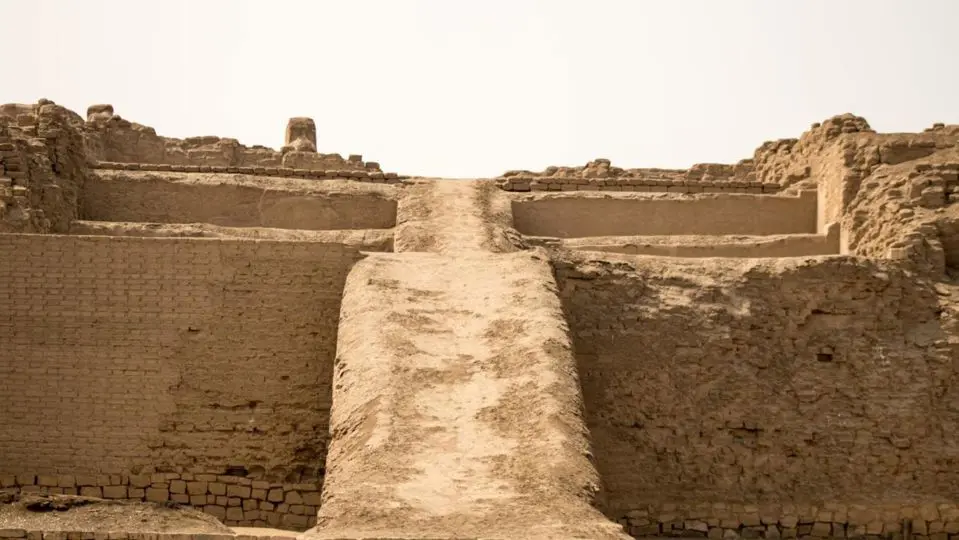
The Pachacamac Archaeological Sanctuary was a central point where the deity Pachacamac was worshipped. According to ancient beliefs, this figure was capable of influencing earth movements and people's destinies. Today, this place is a cultural and tourist magnet due to its history of more than a thousand years, still alive in huge structures, temples, and squares.
The Pachacamac temple in Lima is surrounded by one of the most important archaeological centers on the Peruvian coast. It also has a museum dedicated to the research and exploration of this territory, its religious center, and historical remains.
Do you want to know how to get to Pachacamac from Lima, what to see in the Sanctuary, and why this archaeological adventure is a great plan for a trip to Peru? Below you will find everything you need to plan this visit. And if you want to add the best activities to your trip to the Peruvian capital, do not rule out hiring tours and excursions in Lima.
Adventure to the Pachacamac Ruins: Is it Better to Go with a Tour or on Your Own?
If you are one of those who enjoy learning while walking, choosing a guided tour to Pachacamac from Lima is a great idea. This solves transfers and ensures a tour with specialized knowledge about the history of the place. Thus, the rituals, the cultures that passed through this place, and the details of each temple and structure make more sense during the visit.
If you prefer to go on your own and set up your own exploration route, you can also do it. In this case, keep in mind that Pachacamac is an open-air archaeological site and the sun can beat down hard in the middle of the Lima coastal desert. Therefore, it is advisable to wear comfortable shoes, sunscreen, and water. Likewise, arriving early helps to avoid the most intense hours of heat and make the most of the time touring the sanctuary and the museum in peace.
Where is Pachacamac and How Far is it from Lima?
The distance from Lima to Pachacamac is about 40 kilometers. The archaeological center is located southeast of Lima, in the Lurín River valley. By car or on an organized excursion, the transfer takes about an hour from downtown Lima.
How to Get to Pachacamac from Lima: Distances and Routes
The archaeological center is located at kilometer 31.5 of the Antigua Panamericana Sur, in the Lurín district. The distance from the traditional tourist districts of Lima, such as Miraflores or San Isidro, is 32 kilometers.
The way to make this journey is the Panamericana Sur Highway (National Route 1S). It is a multi-lane paved road in excellent condition. Outside peak hours (between 10:00 AM and 4:00 PM), the journey takes between 45 and 50 minutes.
Traveling to Pachacamac by Private Car or Taxi
The route is via the Panamericana Sur heading south (towards the beaches). At kilometer 25 you cross the Villa Toll booth (Peaje de Villa), whose current cost for light vehicles is around 7.50 soles (payment is usually required in cash).
A few kilometers later you have to take the signposted detour towards the Antigua Panamericana Sur (Conchán exit or San Pedro exit). This road leads directly to the entrance door of the museum and the sanctuary.
The complex has a free parking lot for visitors. Due to the 465 hectares of extension of the sanctuary, it is permitted to carry out the internal circuit aboard the private vehicle. There are enabled parking spaces to stop in front of the pyramids and points of interest.
The taxi option is as viable as ride-hailing apps like Uber or Cabify. In any case, the fare ranges between 50 and 80 soles per stretch from Miraflores. It is always advisable to coordinate the waiting time with the driver or secure a return route, since getting a ride-hailing taxi from the sanctuary door to Lima can take a while.
Public Transport to Pachacamac: Buses and Routes
Going from Lima to Pachacamac by public transport is the most economical alternative, although travel time can extend up to two hours. The best thing is to go to main avenues with a connection to the south, such as the Vía Expresa or Avenida Javier Prado. Interurban buses known as "Los Maleños" pass by there, as well as lines indicating "Lurín / San Bartolo / Pucusana" on their front signs. The ticket cost varies between 4 and 6 soles.
Some buses travel on the new highway and do not enter the Antigua Panamericana Sur. Therefore, before boarding, you must indicate that the destination is the "Cruce de Pachacamac" (Pachacamac Crossing) or directly the "Museo de Pachacamac". If the bus drops you off at the highway crossing with the Lurín bridge, you can walk about 15 minutes along the sidewalk of the Antigua Panamericana Sur or take a local mototaxi (for about 3 soles) to the sanctuary entrance.
Pachacamac Ruins in Lima: What's in the Archaeological Center
The archaeological site is a superposition of structures that evidence continuous occupation from 200 AD until the arrival of the Spanish in 1533. Its architecture is dominated by the use of adobe (raw mud bricks) adapted to the seismic and climatic conditions of the desert coast. The tour of the sanctuary follows a paved circuit connecting the different ceremonial and administrative sectors.
Let's look at the most important landmarks of the walk.
The Pyramids with Ramp of the Ychsma Culture
Before the arrival of the Incas, the Lurín valley was dominated by the Ychsma culture (between 900 and 1450 AD). During this period, Pachacamac reached its maximum urban splendor, and the symbol of this advance was the pyramids.
The "Sector of the Pyramids with Ramp" invites exploring 15 large stepped adobe structures functioning as administrative palaces and ceremonial centers. These pyramids had extensive front courtyards for the congregation of pilgrims and a system of access ramps regulating who could ascend to the upper levels. This challenge was a mechanism of strict social hierarchy.
The Temple of the Sun and the Inca Occupation
Around the year 1470, the Inca Empire integrated Pachacamac into its territory (Tawantinsuyu). Instead of destroying the local cult, the Incas respected the deity of Pachacamac. However, they imposed their own monumental architecture to mark their political and religious dominance.
The most imposing structure of this stage is the Temple of the Sun (Templo del Sol). Built on a natural rocky promontory, this trapezoidal pyramidal building reaches almost 30 meters in height. Its original facade was painted entirely in an intense red still visible in some of its niches. From the top, there is a panoramic view of the Pacific Ocean and the Pachacamac islands.
Another fundamental building is the Acllahuasi (House of the Chosen Women). The bases are built with fine stone masonry brought from the highlands, assembled in the classic Cusco style, upon which adobe walls rise. Here resided the women dedicated to the production of fine textiles and chicha de jora (corn beer) for the rituals of the Inca State.
Pachacamac Site Museum: History and Main Exhibitions
The Site Museum was reopened in 2016 in a building designed to visually integrate with the desert landscape. That is why it is the mandatory gateway before touring the ruins. Its main function is to research and interpret the archaeological findings extracted from the sanctuary after decades of excavations.
The Idol of Pachacamac: The Deity of Tremors
The piece of greatest historical, scientific, and cultural value in the museum is the wooden carved idol of Pachacamac. For centuries it was believed that this idol had been destroyed by the conquistador Hernando Pizarro in 1533, who arrived at the sanctuary seeking gold for the ransom of the Inca Atahualpa. However, the idol survived hidden and was found in 1938.
It is a lucuma wood trunk 2.34 meters long, carved at its upper end. The figure represents a bifrontal deity, with two faces looking in opposite directions. In the Andean worldview, this concept symbolizes the duality of the universe: day and night, masculine and feminine, sky and earth.
Quipus and Spondylus Offerings
Another fundamental section of the exhibition addresses the administration of the sanctuary and the offerings brought by pilgrims. Pachacamac was the central node of a road network (part of the Qhapaq Ñan) connecting the coast with the mountain range.
In the showcases stand out the Quipus: systems of strings and knots used by the Incas for accounting and narrative recording. Many were found in a subway chamber in front of the palace of Taurichumpi (the last Inca governor of Pachacamac).
Another fascinating step of the museum is the "Mullu" or Spondylus, a warm-water bivalve mollusk originating from the coasts of Ecuador. In Andean archaeology, the Spondylus was considered the "food of the gods" and was worth more than gold. In the excavations of Pachacamac, entire deposits of these red shells were found, whole and carved into necklaces. This indicates that thousands of pilgrims traveled thousands of kilometers from northern South America exclusively to leave their tribute at this coastal oracle.
Published by Has Chacon on 08/06/2026